
Book Appoinment
Services
Our Services

Overview
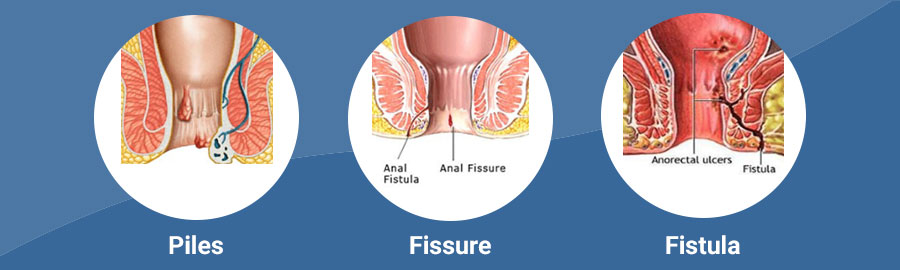
Piles, also known as haemorrhoids, are one of the most widespread health conditions that can affect anyone. Aside from Piles, some of them suffer from Fistula and Fissures. People with piles, fistulas, and fissures frequently seek treatment from the best piles, fissure, and fistula specialist doctor.
What are Piles?
Piles are enlargements of veins that come in various diameters. Piles can be internal or external in nature. Because of the enlarged tissues, they normally come out of the anal area. This is a relatively frequent issue that can affect anyone at any time. Constipation and firm stools are the root causes of piles, says a piles surgeon. Some people develop piles as a result of increased pressure in the lower rectum. Obesity and high tobacco usage are the two more common factors.
Surgical Treatment of Piles
If the piles are large and form externally, they will almost certainly need to be surgically removed. Stapled Haemorrhoidopexy and Laser Surgery are the two common surgical options.
Laser Surgery for Piles
Instead of inserting and cutting the mucosa, this treatment coagulates the Haemorrhoidal tissue with laser beads. When opposed to stapled Haemorrhoidopexy, the main advantage of the laser technique is that it causes less pain. As per the best laser piles surgeon, if the patients undergo laser surgery, they will heal quickly and be able to return to work as soon as possible.
What is Fistula?
A fistula is essentially a tunnel that connects two cavities or apertures. An Anal Fistula is a term used to describe a fistula-in-ano. It’s an irregular channel or link between the anal canal and the external skin, also known as perianal skin. The fistula specialist doctor explains that an anal fistula develops when a patient develops a perianal abscess or an accumulation of pus near the perianal area that ruptures. Some individuals may have fistula as a result of the surgical interruption during insertion and draining.
Laser Surgical Treatment for Fistula
Laser treatment for fistula-in-ano, also known as FiLaC (or fistula laser closure), has gotten a lot of attention in the recent times. Using a radial fibre that is gently removed from the external orifice, laser energy is delivered at 360 degrees into the lumen of fistulas. Because laser ablation is limited to the lumen of fistulas, the procedure is referred to as “sphincter-saving”, says the best laser fistula surgeon.
What is Anal Fissure?
A simple rip or crack in the epidermis near the anal canal is known as a fissure-in-ano or anal fissure. Constipation and firm stool can also cause this. A skin tear in the anal canal occurs as a result of overstretching of the skin in that area. The skin around the anal canal is extremely thin and delicate. Dr. Sanjoy Mandal, the renowned fissure specialist doctor, says that when a person suffering from Fissure-in-ano tries to pass stool, he or she will endure significant discomfort and bleeding.
Laser Treatment for Anal Fissure
Cutting the anal fissure is now a common surgical procedure. The goal of the treatment is to transform a deep wound into a flat wound and remove any impediments to secretory outflow and stool passage. The use of a diode laser rather than an electroscalpel offers a superior final result because wound healing begins sooner and scars become smoother and more elastic.